

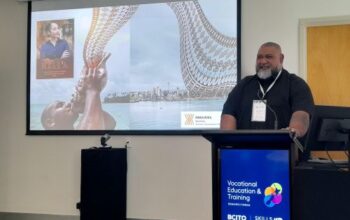
Ringa Hora kaimahi were honoured to attend this week’s NZ Vocational Education and Training Research Forum, which brought together almost 200 people dedicated to connecting research with practice and fostering collaboration across the VET ecosystem.
The forum included presentations from two amazing Ringa Hora kaimahi. Camilla Karehana shared Tirohia ki Tua and challenged people to rethink conventional approaches to Māori access in VET. Moses Alatini presented Kele’a, providing a critical evidence base on the strengths and systemic barriers to Pacific success in the Service sector and VET more generally.
Key themes from the forum included how training systems need to keep up with rapid changes to the world of work, and how emerging technologies like AI can potentially make learning more responsive to learner and industry needs, provided they are used alongside human-centred approaches. Collaboration is critical going forward.
Thank you to the Building and Construction Industry Traning Organisation and Skills Group for organising this great event and to Greg Durkin and Josh Williams for their amazing MCing. We look forward to seeing how the ideas discussed at the forum are put into practice.
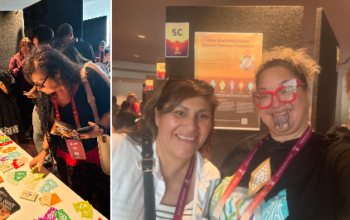
Ringa Hora vocational pathway advisor Hinewai Quensell was honoured to share her career pathway framework, Mata Ārahi Manomano, at WIPCE 2025, the World Indigenous Peoples’ Conference on Education, in Auckland.
Hinewai presented her mahi, with the help of Ringa Hora transformation manager Bridget Grave, to an appreciative audience. She also had the support of Trudy Harrison from Te Aho o Te Kura Pounamu – The Correspondence School, who has used Mata Ārahi Manomano as part of her work with distance learners.
In one session, feedback from the Matawa First Nations youth was that it helped them define what they want to do. We also heard representatives from First Nations peoples from the Northern Territory of Australia that they would really benefit from something similar for their youth.
It was a privilege for Hinewai to make the presentation, and we hope that Mata Ārahi Manomano can be useful for indigenous education around the world.
To learn more about Mata Ārahi Manomano and the associated We Be Who We See initiative, please visit this page.
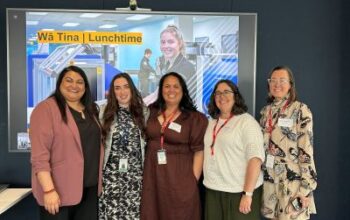
We were proud to co-host the Gender Equality in New Zealand Aviation Symposium in partnership with the Civil Aviation Authority of New Zealand. The event brought together passionate professionals from across the aviation sector to share experiences, challenge the status quo, and explore how we can collectively accelerate progress toward a more inclusive industry.
One of the highlights was hearing from Jenny Connor, who shared valuable insights from Ringa Hora’s workforce data, helping to paint a clearer picture of where the sector stands and where we need to go. Jill Hatchwell, one of our Council members, also shared her journey in aviation, reinforcing the importance of visibility, connection, and sustained leadership in driving gender equity.
What stood out most throughout the day was the passion in the room, from those early in their careers to those who’ve been advocating for years. The willingness to share real, personal experiences created a powerful space for connection and learning. There was a strong sense of momentum and a shared commitment to continue working together to make meaningful, lasting change.
Thank you to all who attended and contributed – this is how change takes flight!
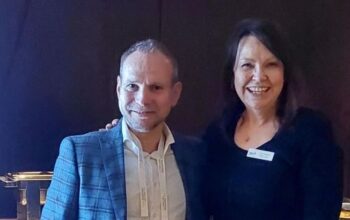
It is always amazing to see the culmination of projects we’ve collaborated on with industry. Martin Szeko, our Industry Engagement Lead, who has worked hand in hand with Business Events Industry Aotearoa (BEIA), represented Ringa Hora at the BEIA conference this week to celebrate the government investment in Te Haeata – the new industry-led qualification we developed.
“This qualification directly addresses workforce shortages in the tourism and business events sector, supporting our long-term goal of building a skilled domestic workforce,” announced Louise Upston, Minister of Tourism and Hospitality.
Ngā mihi nui to BEIA, ServiceIQ, Grow Tourism, and the team who worked on Te Haeata.
